

Government research shows school-based nurseries are not delivering flexible provision to its communities
The latest research into school-based nurseries (SBNs) has highlighted significant challenges in delivering flexible childcare that many families rely on.
This raises important questions about whether the Government’s £400 million investment is being directed where it can have the greatest impact on our youngest children. It has also reinforced the crucial role that PVI nurseries already play in delivering year-round provision for families.
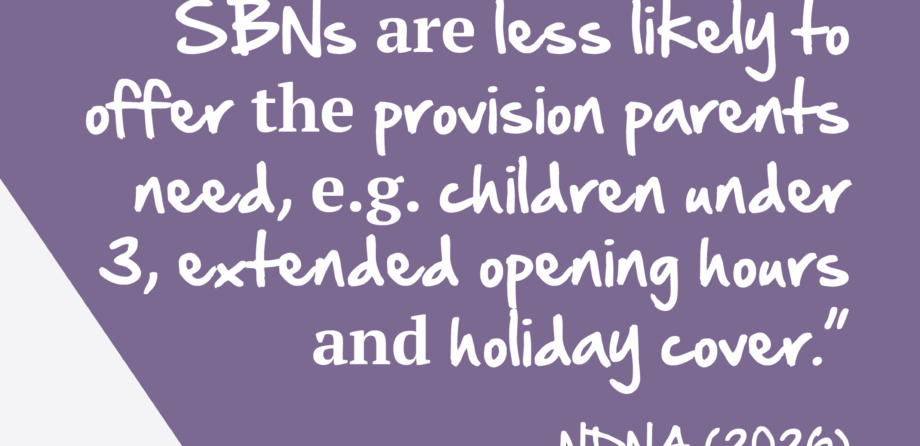
The DfE report found that SBNs are far less likely to offer the provision many working parents rely on, including children under 3, extended opening hours and holiday cover. Only around a quarter (27%) accept under-3s and very few provide year-round or wraparound care, compared with most PVI nurseries and childminders.
Tim McLachlan, Chief Executive of National Day Nurseries Association said:
“The Government’s own report effectively shows that the £400m planned investment in school-based nurseries may not be the best use of this money.
“Despite our calls for the DfE to invest in the existing early years and childcare infrastructure, it began funding school-based nurseries last year to improve access in so-called childcare desert areas. These are mostly in areas of deprivation.
“However this new research shows that the majority of school-based provision does not fulfil the Government’s ambitions and falls way short of the work which private and voluntary providers do.
“Only a quarter of school-based provision serves children under three and only 8% looked after under twos, compared with 97% of PVI nurseries and childminders. School-based nurseries offer very little wraparound or holiday provision which is vital for working families.
“NDNA has repeatedly highlighted cases where existing providers have been undermined or closed by the approach taken on school-based nurseries. There’s a risk that public money will be used to replace good quality childcare that is working for communities with school provision that this research suggests won’t meet their needs.
“It’s time that the Government focused on the underfunding and unfunding of long-established high quality PVI providers who already educate and care for our youngest children day in day out, and all year round. School provision costs more public money than existing provision and as this report shows, does not serve the community as well.”
The research also highlights major barriers facing school settings, including staff shortages, strict ratios for younger children and limited space. Without additional financial support and clear guidance, expansion into flexible or baby provision is unlikely to be a priority for many schools.
The first phase of the Government’s programme saw £37 million allocated for 300 new or expanded primary school nurseries. Phase two was backed by £45 million of funding, delivering 300 more nurseries, targeting disadvantaged communities. However, the research raises doubt about whether this funding will deliver the type of childcare families actually need.
PVI nurseries already form the backbone of early years provision in the UK. They employ and train a significant proportion of the early years workforce and routinely support children with additional needs despite mounting financial pressures.
You can find the government commissioned research here.
- England
- childcare
- Department for Education
- early education
- early education funding
- early years
- Flexible childcare
- funding
- Government
- government funding
- Government plans
- NDNA
- nurseries
- Nursery
Similar Articles
NDNA Scotland announces winner of Children’s Rights Award 2026
Free spring maths activities for early years | Easter maths ideas for nurseries