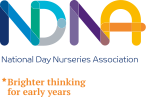


Councils hold back record £115m in early years funding
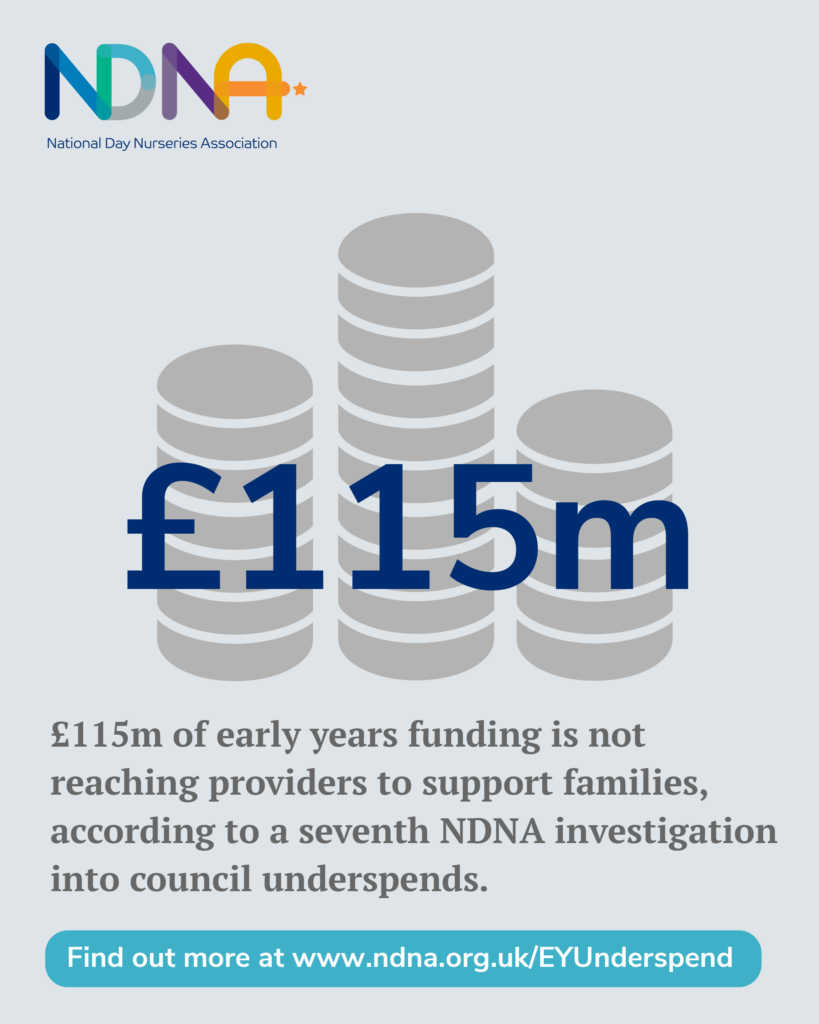
New Freedom of Information (FOI) findings from National Day Nurseries Association (NDNA) reveal that councils across England underspent £115m in early years funding during 2024-25. These figures are the largest underspend recorded in seven years of NDNA annual reports.
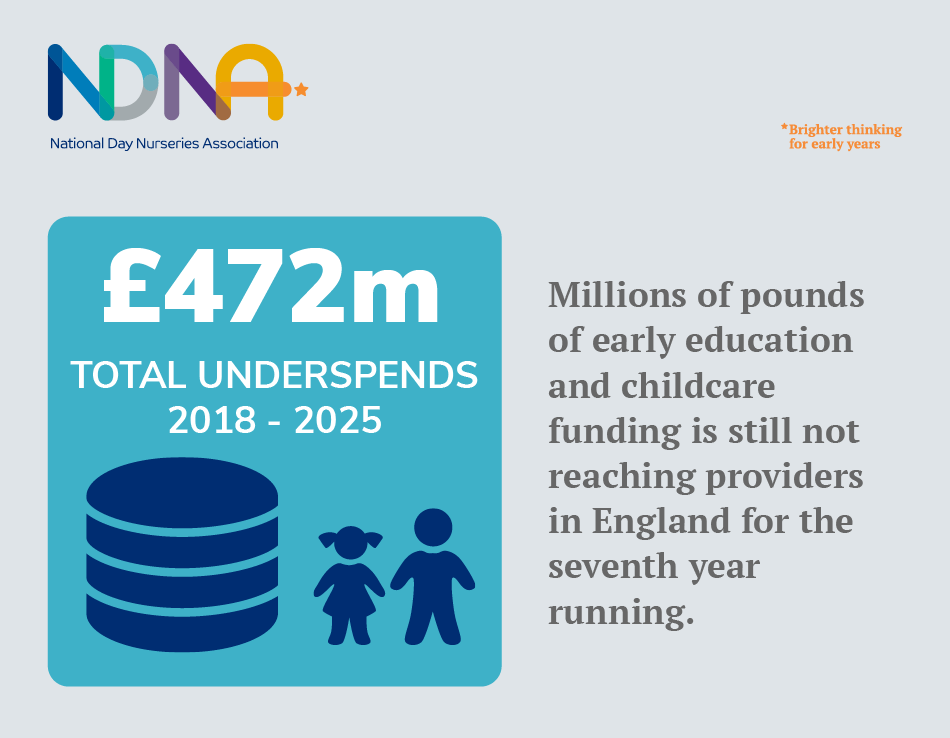
We issued FOI requests to all England local authorities, receiving 129 full responses and 3 partial responses. Of the councils providing data, 99 reported an underspend, with 37 retaining more than £1 million. Shockingly, 17 held back over £2 million intended for early education and childcare places, including 5 London councils.
One council confirmed an underspend but refused to disclose the amount, meaning true underspends are much higher. Across all NDNA investigations since 2018, councils have now accumulated £472 million in underspent early years funding.
Tim McLachlan, Chief Executive of NDNA said:
“These large, retained underspends come at a time when providers are struggling to stay afloat, with many expecting to make a loss or break even, a trend identified in NDNA’s most recent research.
“Last year’s report similarly found widespread surpluses and warned that money intended for children was not being used for their funded places. In 2023-24, NDNA uncovered over £65m left underspent, with 75% of councils reporting underspends.
“This ongoing pattern shows deep flaws in how early years budgets are managed. With more funding entering the system than ever before, it is unacceptable for councils to withhold millions while nurseries struggle with rising costs, recruitment crises and unprecedented demand.”
System not fit for purpose
Last year saw a major increase in early years funding as two-year-olds and nine-month-olds became eligible for funded childcare. Despite this, many councils continued to hold back significant sums.
From our responses:
Pass-through rates raise red flags
- 37 councils will carry forward unspent funds into the next financial year
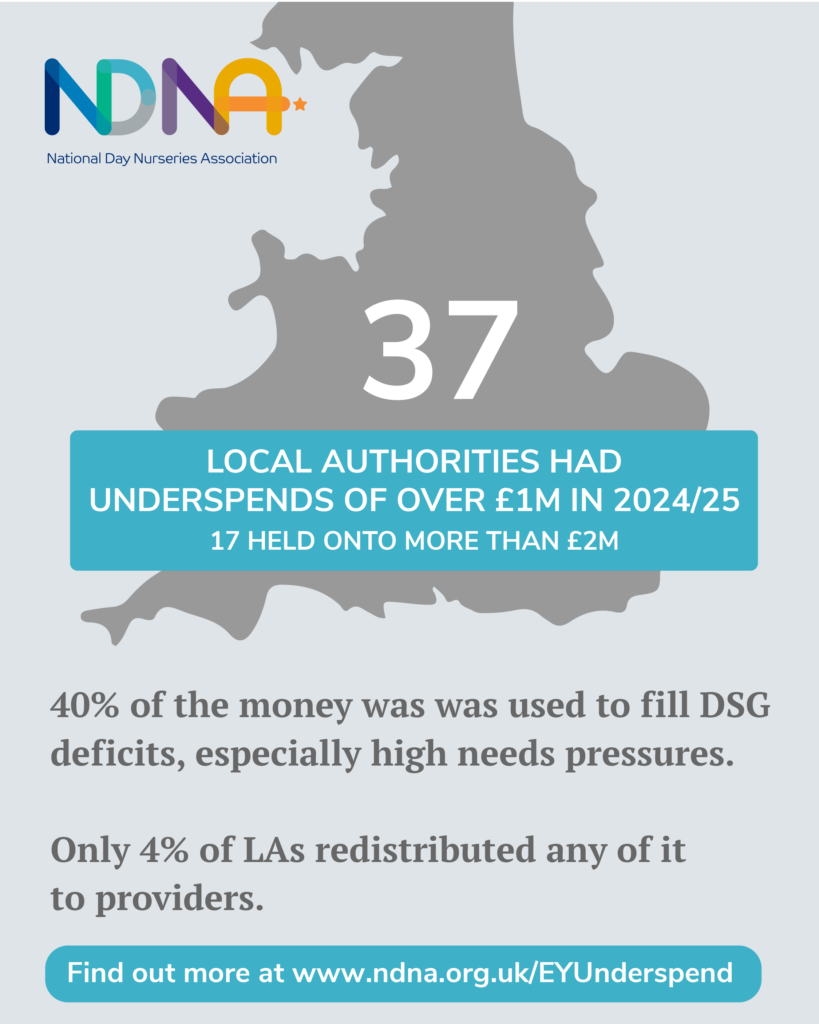
- 56 councils used early years money to offset wider education deficits
- Only five councils redistributed any leftover funding to providers.
Three councils admitted to pass-through rates for each one of the age groups below 95%. Worcestershire admitted a PTR of 86% for under 2s, compared to over 100% for 3 and 4s, and both 2-year-old groups at over 98%.
Our investigation found 20 councils reported a pass-through rate (PTR) of 95% which is the bare minimum required by the Government which stipulates that councils should pass through at least 95% of their funding to providers.
Examples include:
- Hartlepool, Rutland, Worcestershire – PTR below 95%
- Durham, Wakefield, Westminster and Islington recorded a PTR at just 95%
Disparities in TPPG distribution and childcare sufficiency assessments
Distribution of the Teachers’ Pay Additional Grant (TPPG) varied widely:
- 49 councils shared TPPG equally between all providers
- 39 councils allocated none of it to PVI providers.
Childcare sufficiency assessments, which identify whether councils have enough childcare places also showed inconsistency:
- 86 councils completed an assessment since September 2024
- 36 haven’t updated theirs since before this time.
NDNA is urging the Government to:
- Increase the pass-through rate now that the overall allocations have increased
- Ring-fence early years funding so it cannot be used to plug deficits elsewhere
- Overhaul the system and place money directly with providers through a child account model
- Introduce greater transparency in local authority reporting.
These reforms are essential if the Government is serious about delivering the childcare expansion successfully.
Full results of our FOI request investigation
- Full responses from 126 local authorities, 3 were partly answered
Early years funding:
- 56 councils offset their deficit, which is 44%
- 37 councils retained their money in reserves or carried it forward to next year, which is 29%
- Only 5 councils redistributed this money to providers, which is 4%
Underspends:
- Respondents had a total underspend of £114,822,427.17
- The council with the highest underspend is Hampshire (£5.1 million), followed by Leicestershire (£5 million) and Wiltshire (£4.9 million)
- 17 councils had an underspend of more than £2 million, 5 of which are in London
- 37 councils had an underspend of more than £1 million
- Respondents had a total overspend of £6,217,978.24
View the top 10 underspends by local authority
Pass-through rates:
- 23 councils recorded a pass-through rate of 95% or below
TPPG funding:
- 49 councils equally distributed TPPG funding, which is 38%
- 39 councils didn’t distribute this funding to PVI nurseries, which is 31%
Childcare sufficiency assessments:
- 86 councils had a childcare sufficiency assessment since September 2024, which is 68%.
- England
- childcare
- early education
- early years
- education
- England
- funding
- local authorities
- NDNA
- underspent funding
Similar Articles
More to do to get Ofsted inspections right despite positive signs
Conservative Party Proposes to Remove Earnings Limit on Funded Childcare Places