
Creating safer sleep environments in early years settings
Sleep is an important part of a child’s day. It supports growth, development, emotional well-being and learning. In early years settings, educators also have a vital role in making sure every sleep is as safe as possible.
Safer sleep practice helps to reduce the risk of sudden infant death syndrome, known as SIDS, in babies up to 12 months old. It also supports safer sleep for older babies and young children by reducing risks linked to unsafe sleep positions, unsuitable sleep surfaces, overheating and items in the sleep space.
Why safer sleep matters
The safest sleep routines are consistent, understood by the whole team and followed for every time a child sleeps. Babies can be more vulnerable if they were born prematurely, had a low birth weight, have been exposed to smoking or sleep in unsafe positions or places. This is why safer sleep should be part of daily safeguarding practice, not just a written policy.
Educators should be confident in the setting’s safer sleep procedures and understand the latest advice from the Department for Education, the Lullaby Trust and the NHS. This includes knowing how to set up a safe sleep space, how to position babies and how to supervise children while they are asleep.
Create a clear and firm sleep space
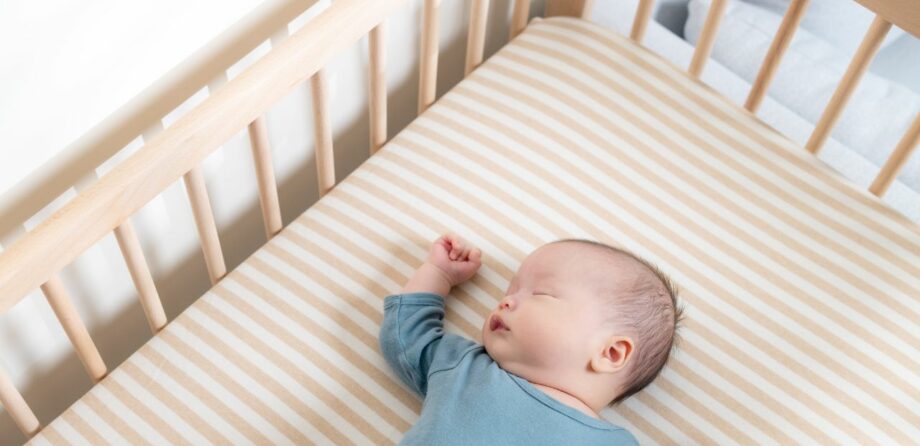
Every baby and child should have their own separate sleep space. The surface should be firm, flat and clear.
For babies aged 12 months and under, a cot is the safest place to sleep. This can include a cot, carrycot, Moses basket or travel cot that meets relevant British safety standards.
For children over 12 months, this may be a cot, bed or suitable mattress on the floor, depending on the setting’s arrangements and the child’s needs.
A safe sleep space should have a firm, flat waterproof mattress and a clean fitted sheet. If lightweight bedding is used, it should be tucked in securely and should not go above the child’s shoulders. Where blankets or sheets are used with babies, the baby should be placed feet-to-foot at the bottom of the cot.
Cots should be kept clear. Pillows, duvets, cot bumpers, wedges, straps, loose blankets, soft toys and extra items should not be used. These items can increase the risk of a baby’s head or face being covered or their airway becoming restricted.
Start with the safest position
Babies should be placed on their back for sleep. If a baby rolls onto their tummy, they should be gently turned onto their back unless they can roll from back to front and back again by themselves. Once they can do this confidently, they can be allowed to find their own sleeping position.
Keep babies at a comfortable temperature
Overheating is a known risk factor for SIDS. Settings should monitor the room temperature and aim to keep sleep spaces for babies between 16°C and 20°C where possible. Educators should also make sure babies and children are dressed appropriately for sleep and that their heads are not covered.
Baby sleep bags can be useful when they are well fitted and used according to the manufacturer’s guidance. They should fit securely around the shoulders so the baby cannot slip down inside. Settings should work with parents before using sleep bags and should always consider the room temperature, the child’s clothing and the tog rating.
To check if a baby or child is too hot or cold, feel their chest or the back of their neck (hands and feet will usually be cooler, which is normal). If their skin feels clammy or sweaty, remove one or more layers of clothing or bedding. You should use your professional judgement during extreme temperatures.
Supervise sleep closely
Sleeping children must always be within sight and hearing of staff. Babies under six months should have an adult in the same room for every sleep and should be checked frequently. For babies over six months and toddlers, settings should continue to carry out regular visual checks and make sure children can be seen and heard at all times.
Visual checks should be meaningful. Educators should look for the rise and fall of the child’s chest, ensure they remain in a safe sleeping position and check that their head and face remain uncovered. Settings should record sleep checks in line with their procedures.
Support children who are new to the setting
New babies and toddlers may take time to settle into a different sleep environment. During the first few weeks, educators should take extra care to understand the child’s usual sleep pattern, comfort needs and position. Where appropriate, an adult should stay in the room and check the child frequently until staff are familiar with their routine.
Work in partnership with parents
Parents know their child best, so it is important to gather information about sleep routines when a child starts at the setting. This should include when the child usually sleeps, how they settle and any comfort items used at home.
Partnership working does not mean following unsafe sleep practice. If a parent requests a sleep position or routine that is not in line with safer sleep advice, educators should explain the setting’s policy clearly and sensitively. An alternative sleep position should only be considered where there is medical advice and written permission is in place.
Respond safely when children fall asleep elsewhere
Babies and young children sometimes fall asleep while being held, in a buggy, in a car seat or while travelling. These are not suitable main sleep spaces. Once it is safe to do so, educators should move the child to a clear, firm and flat sleep surface so they can complete their rest safely.
When children come indoors, coats, hats, extra layers and outdoor blankets should be removed as soon as possible, even if this means waking them. This helps to reduce the risk of overheating.
Balance sleep needs with children’s well-being
A responsive approach means following individual routines rather than expecting every child to fit one set sleep pattern. Children do not all need to sleep at the same time. Some children may need a quiet space, dimmed lights or soft music to help them settle. Others may need opportunities to continue playing, learning and being active.
Educators should not force a child to sleep or keep a tired child awake. They should also avoid waking children routinely unless there is a clear reason linked to their well-being, safety or parent agreement. Any concerns about sleep, changes in routine or a child not getting enough rest should be shared with parents at the end of the session.
Remember twins and multiple births
Twins and multiple birth babies may have routines that parents are keen to maintain. Settings should work with parents while still following safer sleep advice. Each baby should have their own separate sleep space and should be placed on their back to sleep.
Make safer sleep part of everyday safeguarding
Safer sleep is everyone’s responsibility. Leaders should make sure all staff understand the setting’s procedures, know where to find current guidance and feel confident to challenge unsafe practice. Regular discussion, supervision and training can help keep safer sleep at the centre of daily practice.
A clear, consistent approach helps educators support children’s rest while keeping safety at the forefront. By following safer sleep guidance for every sleep, settings can protect babies and young children, reassure parents and strengthen safeguarding practice across the whole team.
Key takeaways
- Place babies on their back for every sleep and only move away from this when they can roll both ways by themselves
- Use a clear, flat, firm and separate sleep space with a waterproof mattress and no extra items
- Keep babies at a comfortable temperature and aim for 16°C to 20°C in sleep spaces for babies aged 12 months and under
- Make sure sleeping children can be seen and heard, with frequent visual checks recorded in line with setting procedures
- Work with parents while being clear that safer sleep guidance must always be followed unless medical advice says otherwise
Treat safer sleep as part of everyday safeguarding and make sure all educators understand the setting’s procedures.
Further reference
For more information, early years providers may wish to refer to:
- Department for Education’s Help for early years providers: Safer sleep guidance
- Providers in Wales should refer to the NMS and linked guidance
- The Scottish Government’s Safer Sleep for Babies: guide for professionals
- The Lullaby Trust: Safer sleep awareness – guide for childminders, foster carers, nannies and nursery settings
- NHS guidance on sudden infant death syndrome (SIDS).
NDNA products
Baby Room Leader: Live Virtual Classroom training
Baby Room Leader: Online training
Similar Articles
Top tips: Encouraging curiosity and why it matters

Minibeast and bug discovery early years activity
