
Ministerial letter: changes to EYFS safer sleeping requirements
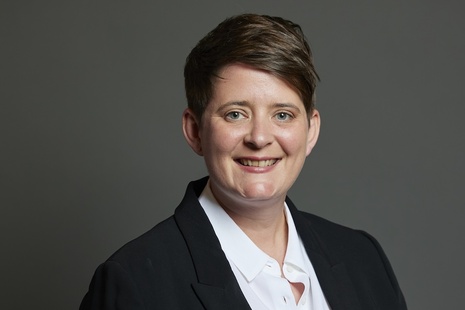
Early education minister Olivia Bailey has written to NDNA to outline her intentions to update the Early Years Foundation Stage (EYFS) this year with the primary objective to “clarify the safeguarding requirements for sleeping arrangements”.
The updates will be part of their response to the Campaign for Gigi, led by Genevieve Meehan’s parents Katie Wheeler and John Meehan.
Since the publication of the Minister’s letter we have received a number of enquiries from members seeking greater clarity. We have asked officials at the Department for Education for urgent answers to questions and points in the following areas:
- What is meant by being compliant now and what instructions Ofsted have been given
- Changing the wording on age to months instead of years to avoid confusion
- Defining a cot, including whether moses baskets and coracle beds are acceptable
- Whether sight and sound includes via a monitor system or has to be an adult with sleeping children
- Advice on dummies as comforters
- Greater clarity on advice around room temperature and children rolling
We will share responses we receive with members and have suggested that a FAQ alongside the new EYFS wording to address these questions would assist providers in meeting the requirements.
The Minister writes in her letter:
Genevieve Meehan’s death in 2022 was a devastating tragedy that should never have happened. Our thoughts remain with Genevieve’s parents, family members and others that have been affected by this. Children’s safety is at the very heart of this government’s plan for change and, as Minister for Early Years, the safety of our children is my utmost priority.
It is already expected that early years providers must put children down safely to sleep. All early years providers are required to meet the safer sleep requirements set out in the EYFS statutory framework, which currently links to the NHS safer sleep guidance. Providers should have already taken action to ensure that they are acting in accordance with the NHS guidance. and I urge all providers to ensure that they are doing so.
As a result the Minister is updating the wording set out in the EYFS around safer sleeping arrangements which will come into effect from September 2026 subject to parliamentary processes. But providers should already be compliant with this guidance in line with the Lullaby Trust. https://www.lullabytrust.org.uk/wp-content/uploads/2025/02/Safer-sleep-awareness-for-early-years-settings-booklet.pdf
The current EYFS states:
(3.84) Sleeping children must be frequently checked to ensure that they are safe. Being safe includes ensuring that cots and bedding are in good condition and suited to the age of the child, and that babies are placed down to sleep safely in line with the latest government safety guidance: https://www.nhs.uk/conditions/sudden-infant-death-syndrome-sids/). Practitioners should read NHS advice on safety of sleeping babies: https://www.nhs.uk/conditions/baby/caring-for-a-newborn/reduce-the-risk-of-sudden-infant-death-syndrome/
New wording is as follows:
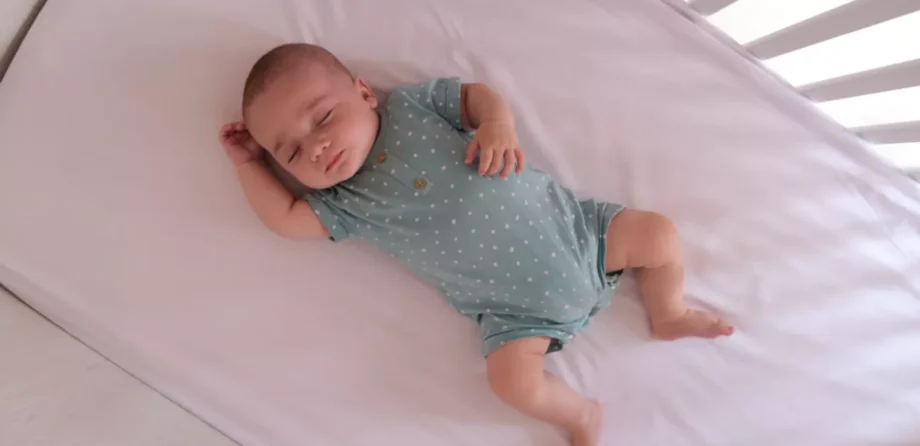
Babies and children must be placed down to sleep safely. For children under 2 years old, providers must ensure that:
• Children are placed down on their back in their own separate sleep space on a firm flat surface such as a cot, bed or mattress on the floor. Babies aged 1 year and under must only be placed to sleep in a cot.
• Sleep spaces should only contain a firm, flat, waterproof mattress and lightweight bedding which is firmly tucked in around the child below their shoulders to prevent head covering. Alternatively, a well fitted baby sleep bag may be used. Check the manufacturer recommendations before using a baby sleep bag.
• Where blankets are used, the child is placed feet-to-foot at the bottom of the cot, with blankets tucked in.
• Cots must not contain extra items such as toys, pillows, extra blankets, bumpers, wedges or straps.
• Children should not get too hot or cold. The recommended room temperature for babies is 16 – 20˚C.
• Children’s heads are not covered.
• Children under six months of age must always have an adult with them in the same room for every sleep. All children must be frequently checked when sleeping.
• Children are always within sight and hearing of staff when sleeping. Providers must ensure that all staff read NHS advice on Sudden infant death syndrome (SIDS) – NHS. More information on safer sleep guidance is available from The Lullaby Trust.
This updated wording has been developed with the Lullaby Trust, medical experts and Ofsted.
Stella Ziolkowski, Director of Quality & Training said:
“We welcome the more detailed safer sleeping requirements which will ensure that all early years providers across England know they are keeping children as safe as they can be. We will be working closely with the Government on all these changes to make sure they are deliverable. It’s also important that providers know which aspects will be brought in from September and how these will be inspected going forward. We are speaking with the DfE on this and will update members as soon as we have a clearer picture.”
Other aspects of the EYFS will also be updated, including:
- the obligations for providers of childcare on domestic premises
- to notify Ofsted about persons aged 16 years or older living or working on any premises from which childcare on domestic premises is provided
- screentime and online safety guidance for early years settings
- potential changes to ensure that children are suitably protected from banned dog breeds in childcare settings
On this last point, the Department for Education is consulting with stakeholders. A full communications and engagement plan on all these updates will support the sector with compliance.
As a result of the above, NDNA will be reviewing any policy and procedure templates which will be affected. This will include a new sleep policy which will include the proposed wording for the EYFS and requirements for Scotland and Wales.
In Scotland there is already detailed sleeping requirements for providers to meet https://www.gov.scot/publications/safer-sleep-babies-guide-professionals-2/
https://scottishcotdeathtrust.org/wp-content/uploads/2019/02/early-years-safe-sleep-guide.pdf
For providers in Wales, each health board has its own specific guidance such as these ones: https://www.basisonline.org.uk/ https://www.lullabytrust.org.uk/baby-safety/safer-sleep-information/keeping-a-clear-cot/ https://www.sands.org.uk/ https://www.unicef.org.uk/babyfriendly/wp-content/uploads/sites/2/2018/08/Caring-for-your-baby-at-n…
https://www.gwentsafeguarding.org.uk/assets/en-documents/Practice-Reviews/7-Minute-Briefing-safe-sl…
- Department for Education
- DfE
- early education
- early years
- EarlyYears Ministers
- Government
Similar Articles
Improving children’s outcomes is the top priority in Wales-Scotland agreement

Calls growing to raise the earnings threshold for funded childcare
