

One in seven childcare professionals paid around minimum wages
The Low Pay Commission – the body which recommends minimum statutory wage rates to the Government – has published its report for 2025:
https://www.gov.uk/government/publications/low-pay-commission-report-2025
Their report contains all the research, engagement and data which formed the basis of the recommendations to the Chancellor last November to increase the rates to the new levels which come in from April 2026.
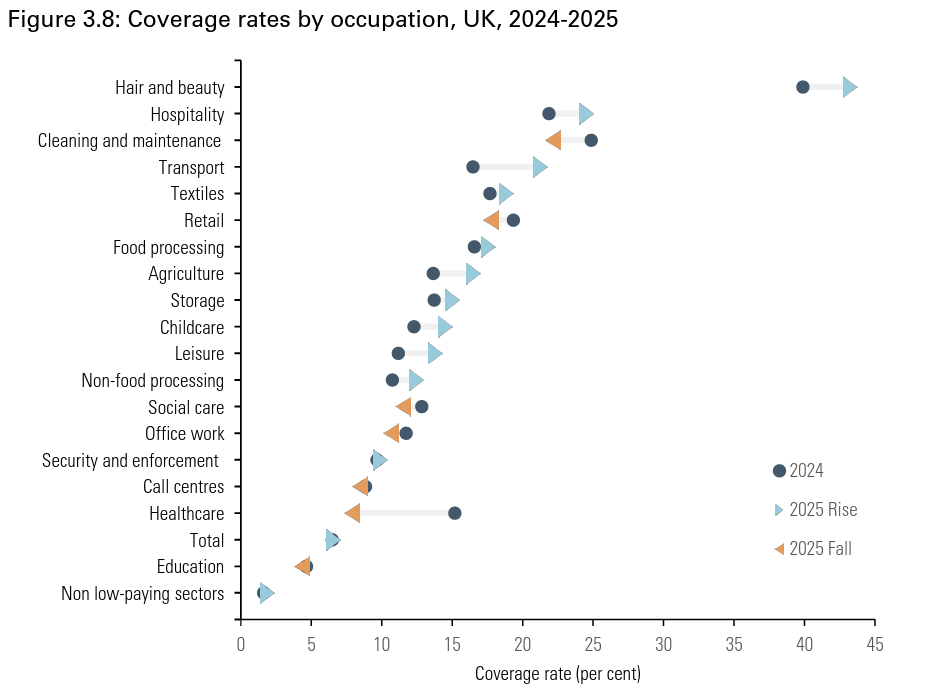
The published data shows that the early education and childcare sector is well above the national average for the percentage of its workforce who are paid at or around the National Living Wage (NLW) for 21 year olds and over and National Minimum Wage.
Across the country the average is 6.6% of all workers who are paid at or just above the statutory wage. But this increases to 14.5% for the childcare sector, which is an increase from 12.3% last year.
Sectors like beauty (43.3%) and hospitality (24.6%) are in a worse position.
Tim McLachlan, Chief Executive of NDNA told the press:
“The Low Pay Commission acknowledges that childcare is a publicly-funded sector so employers face challenges when funding rates don’t keep pace with statutory minimum wage rises. Governments in all nations need to recognise that pressure and address this underfunding urgently.
“The Low Pay Commission relates this funding pressure to increased staff turnover and difficulties recruiting and retaining staff which are key issues for providers. A higher proportion of the childcare workforce are paid at – or just above – minimum wages but the hourly underfunding means it’s much harder to maintain pay differentials to reward the more skilled, qualified and experienced staff members.
“As they quote from one nursery, their staff leave for jobs in supermarkets which pay better but involve less stress. This situation must be addressed so our children have qualified, motivated practitioners supporting their development and wellbeing.”
NDNA gave evidence to the Low Pay Commission ahead of their report, highlighting that most of the extra £1.6bn of Government funding promised in the spending review would be spent on funded hours for under twos. This left little room to fund statutory wage increases or changes to National Insurance Contributions (NICs).
NDNA reported to the Low Pay Commission that since 2017, funding for childcare had risen by 33% against an increase in the NLW of over 60%. NDNA’s estimate of the combined impact of the NLW and NICs was £2,600 per employee.
The report gave an overview of the economy relating to the workforce marketplace including:
- Poor economic growth
- Rise in NICs was significant and unexpected introduced at same time as minimum wages in April 2025 so difficult to separate impact of each
- Inflation has come down but still remains above 2% target and prices of goods and services substantially higher than four years ago
- Wage growth has exceeded forecasts and pay differentials have been squeezed
- It was too risky to remove the 18 – 20 age bracket at this time
- Demand for apprentices fallen
- Business confidence picked up in 2025 but remains below long term average
The Low Pay Commission will recommend reducing the NLW to 20 year olds in 2027; then 18 and 19 year olds will move together in 2028 or 2029.
Read the full report here.
- England
- Chancellor
- childcare
- early education
- early years
- Government
- Low Pay Commission
- National Living Wage
- National Minimum Wage
- NDNA
Similar Articles
More to do to get Ofsted inspections right despite positive signs
Conservative Party Proposes to Remove Earnings Limit on Funded Childcare Places