
Early years activity: Making a picture book together
This activity supports practitioners to create a special picture book by inviting children to draw their own ideas as part of a shared story. Adults are there to support each child with their picture and write down their words, helping to build language and confidence. All the pages are then put together into a book to read and enjoy as a group, celebrating every child’s contribution and creating a lovely sense of belonging.
Making a picture book together learning aims
- Talk about their ideas
- Develop early mark-making and creativity through drawing and exploring materials
- Build confidence and self-expression
- Begin to understand that marks and words carry meaning
- Develop listening and attention during group story time.
Resources you will need for this activity
- Blank paper
- Crayons, markers or paints
- Glue sticks
- Stapler or ribbon (to bind the book)
- Stickers or magazines for cutting (optional).
Making a picture book together activity outline
- Gather the children together, introduce the activity and explain that they are going to work together to make their very own storybook. Tell them that it will be a shared story and everyone will help to make it
- Begin with a simple story idea that links to something familiar, such as a recent trip (e.g. a visit to the park) or a current interest. Alternatively, spark their imagination with an open-ended start like, “Once upon a time in our nursery…” then pause, giving children time and space to share their ideas
- Encourage all children to take part in their own way. Accept all contributions, including single words, sounds or gestures and build these into the story – you could draw the storyboard as you make it up with the children
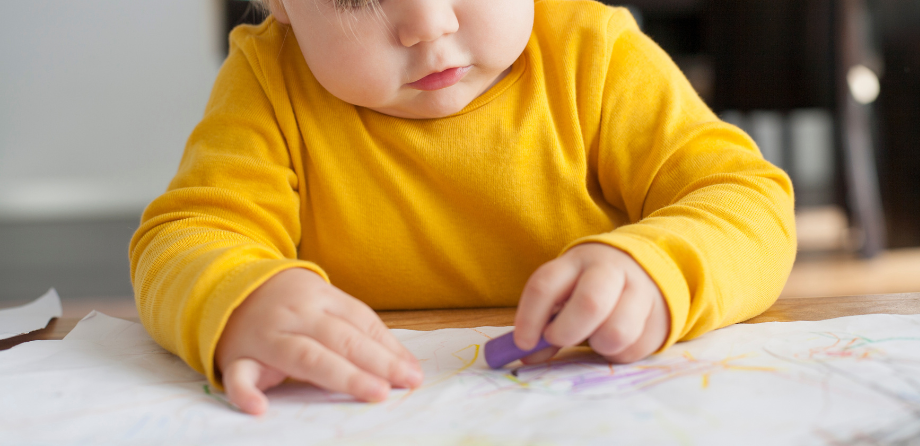
- Encourage them to create their own picture for the story in a way that feels natural to them. Some children may enjoy making marks, while others may draw recognisable shapes or simple pictures
- As children are creating their pictures, try to engage with each one individually. Use simple prompts such as, “Tell me about your picture,” or “What is happening here?”. Model language by describing what you see, supporting vocabulary development
- When a child is ready to share, ask them to describe their picture. Record a short sentence based on their words directly onto the page. Keep sentences brief and meaningful, reflecting the child’s voice. Read the sentence back to the child to reinforce the connection between spoken and written language
- Once all children have contributed, bring the group back together. Collect the pages and arrange them into a basic sequence. Don’t worry too much about the correct order; the focus should be on participation and shared experience
- Bind the pages together using a stapler or ribbon to create a book. Show the completed book to the children, acknowledging their contributions and effort
- Read the story aloud to the group, pointing to each page as you go. Use expression and encourage children to join in where possible, for example through sounds, gestures or repeating familiar words
- Revisit the book regularly to support familiarity, confidence and language development.
How to extend this activity
Provide template books that the children can access to make their own stories.
NDNA products to support you with this activity
Let’s look at writing – online course
Disclaimer: Activities with children must always be risk assessed, including for allergies or choking. Children must always have adequate supervision. Resources and materials must always be appropriate for children’s age and stage of development.
- Activity
- MyNDNA

