

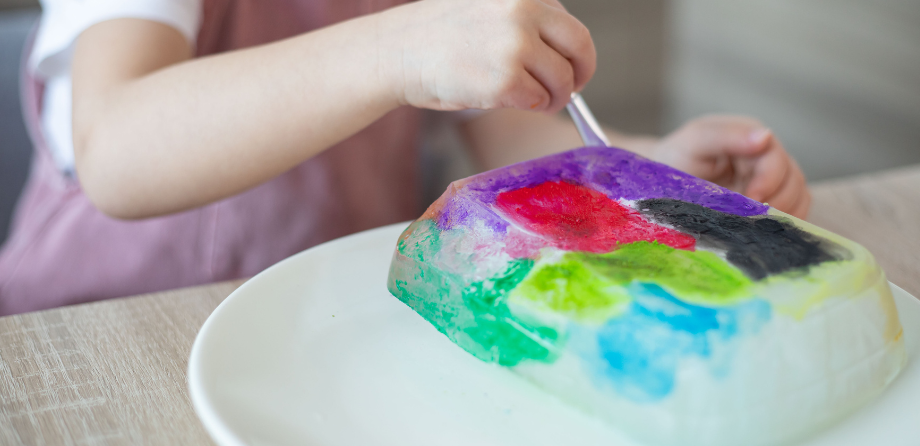
Early years activity: Frozen balloon explorers
Freezing water in balloons is an amazing sensory experience and also a great opportunity for children to discover the science behind freezing and melting.
Frozen balloon explorers activity learning aims
- Engage in a sensory experience through touch
- Discuss the cause and effect of freezing and melting including predicting what will happen
- Use of descriptive language
- Explore mathematical concepts such as comparison.
Resources you will need for this activity
- Balloons
- Food colouring
- Water
- Freezer.
Frozen balloon explorers activity outline
You could make these with the children and discuss what they think will happen at each stage or you could make the frozen balloons in advance so they are ready for children to explore.
To make the ballons:
- Add few drops of food colouring into a deflated balloon before filling with water
- Fill with water and tie the balloon. You may want to fill some balloons with different amounts of water to encourage discussion, comparison and exploration
- Shake well to mix the food colouring
- Freeze overnight in the freezer or leave outside if it’s cold enough
- Once frozen solid remove the outer balloon (just snip and peel away) and place in a tray, on the ground, or wherever you want the children to discover them.
Encourage children to explore the frozen balls and describe their observations. Prompt them to think about how the balls feel, which one is the heaviest or lightest and whether this coincides with their size or not (such as whether the larger balloons are heavier than the smaller ones) and whether they look the same or different and why. Support children in making predictions about what they think will happen to the frozen balloons when they are left out in different environments.
How to extend this activity
- Use a variety of containers to freeze water, such as rubber gloves. Tie off different numbers of fingers on each glove before freezing, then challenge the children to count and identify how many fingers each frozen ‘hand’ has
- Add plastic animals or objects such as shells inside the balloons. How can children get these and how long will it take? Encourage them to explore different ways of melting the ice (in the sun, over a radiator, with salt) and find out the most effective way to release the frozen objects.
NDNA products to support you with this activity
Characteristics of Effective Teaching and Learning – England online course
Little Scientists Leading the Way – Online course
Disclaimer: Activities with children must always be risk assessed, including for allergies or choking. Children must always have adequate supervision. Resources and materials must always be appropriate for children’s age and stage of development.
- Activity
- MyNDNA

