
Top tips: Recycling Awareness Week
September is the time you can join in with the recycling awareness week. Recycling is a great way to support the environment and these top tips are to support the recycling, reuse and repurposing of everyday materials, with practical ideas that can be incorporated into nursery routines and activities, helping to reduce waste and make the most of the resources already available.
Top tips for Recycling Awareness Week
- Create a recycling/repurposing collection point. Encourage children, staff and parents to share and take items that can be repurposed, for example, glass jars, egg containers etc. You may also wish to create a clothes bank recycling point for parents to share clothing items they no longer need or use (nominate a member of staff to check items, ensuring the are clean, dry and free from sharp edges, loose parts or other potential hazards)
- Involve children in decision making by asking children what they think an object could become or how it could be used again. Their ideas may lead to imaginative new uses
- Review your daily activities with a view to identify waste. Ask staff to identify ways they can reduce waste in each of your rooms
- Consider whether you have the space to begin composting. This will provide children opportunities to observe how food waste breaks down and provide compost that can be used in your garden or shared with families
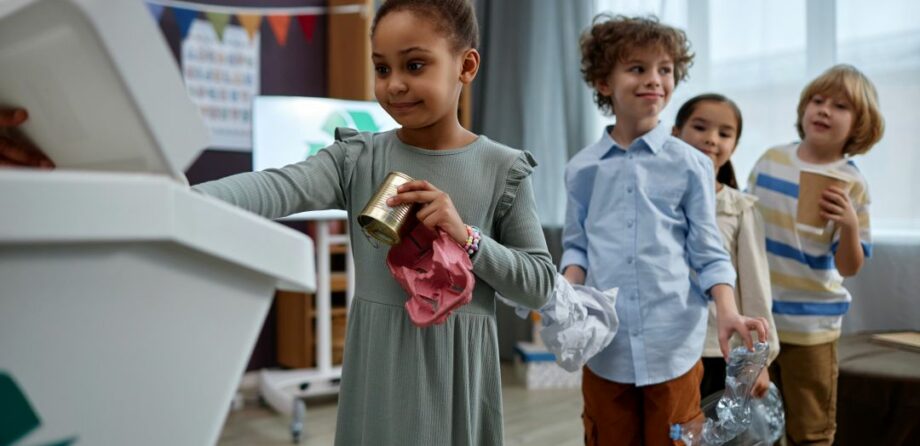
- Encourage children to pick up litter from the nursery environment and when out in the community (provide gloves or litter pickers). Talk about how to safely dispose of litter and the importance of doing so to keep wildlife safe and protect the environment
- Ensure all staff are great role models in the environment, for example, using both sides of paper, switching off lights, reusing materials, turning off taps whilst soaping hands, and sorting and storing waste in appropriate bins
- Celebrate children’s ideas with examples of how children have reused or repurposed objects. Create a photo display. This helps make sustainability visible and shows children that their ideas and choices can make a difference to the environment.
NDNA products to support you with these top tips
Little Scientists Lead the Way – Online course
Disclaimer: Activities with children must always be risk assessed, including for allergies or choking. Children must always have adequate supervision. Resources and materials must always be appropriate for children’s age and stage of development.
Similar Articles
Good Practice Spotlight. How Meadowbank Day Nursery achieved NDNA Millie’s Mark.
For Meadowbank Day Nursery in Monmouthshire, achieving NDNA Millie’s Mark was about more than gaining…
Read more 
Benedict's Law
Benedict’s Law is a set of national measures designed to improve allergy safety in schools.…
Read more 