

Early years activity: How do I feel
By noticing and naming feelings, children start to understand their emotions and those of others. This playful ‘faces and feelings’ activity helps to build empathy, confidence and extends children’s emotional vocabulary.
How do I feel learning aims
- Recognise and name a range of basic feelings
- Identify facial cues linked to emotion
- Begin to understand that other people can feel differently to them
- Explore strategies to manage big feelings.
Resources you will need for this activity
- Images of faces showing different emotions – happy, sad, angry, scared, surprised, excited etc.
- Small mirrors or one large mirror.
How do I feel activity outline
- Gather children and sit in a circle. Spread the emotional expression cards in the centre
- Model a happy expression and ask the children to show you their happy face. Repeat with a couple more emotions
- Show the cards in the centre are photos/pictures of faces showing different emotions
- Choose a card and change your face so that you copy the emotion. Ask the children, “What am I feeling?” Then ask, “How can you tell?” Encourage them to describe your face. Ask for details such as, “Are the corners of my mouth turned up or down?”, “Am I frowning or screwing up my eyes tightly?”, “Are my eyebrows moving?”
- Invite the children, one by one, to choose a card and copy the expression using their face and then turn to the others, asking, “What am I feeling?”
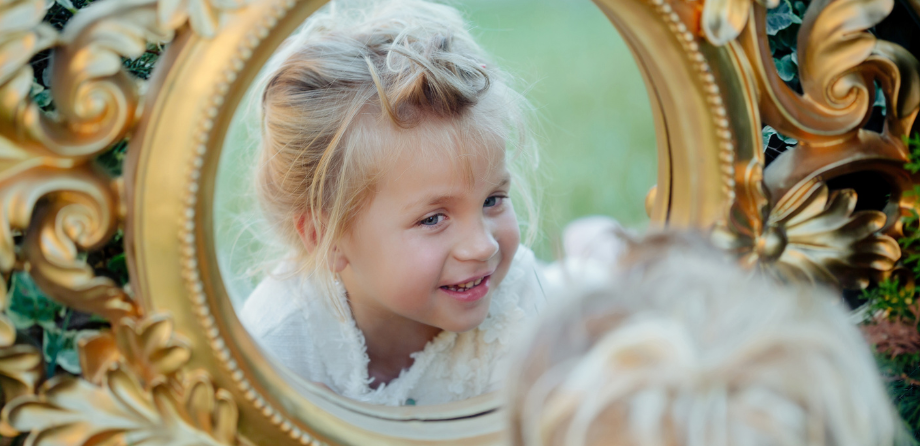
- Give out small mirrors or gather around a large mirror and ask the children to copy the facial expression in the mirror. Draw attention to how their eyes, mouth, eyebrows or cheeks change when they show the emotion. Encourage descriptive language
- Put down the mirrors and ask, “When might someone feel sad/worried?” and then, “What could we do to help someone who feels sad/worried?” You may need to model some responses, for example, “We could ask, are you okay?”, “We could offer a teddy” etc.
- Close the activity by asking how the children are feeling now. Tell them they can show you by holding up a card that shows that emotion or show you with their face
- Thank everyone for sharing their feelings and remind them that feelings are okay.
How to extend this activity
After identifying feelings shown on picture cards, sort them into ‘feels good/ feels tricky’ boxes/hoops.
NDNA products to support you with this activity
Supporting children’s emotional well-being – England factsheet
Child development: Birth to five years – Online course
Disclaimer: Activities with children must always be risk assessed, including for allergies or choking. Children must always have adequate supervision. Resources and materials must always be appropriate for children’s age and stage of development.
- Activity
- MyNDNA
Similar Articles
Early years activity: Number rhyme time
Developing confident mathematicians with a positive attitude and interest in maths starts in a child’s earliest…
Read more 
Top tips: Ensuring staff know and understand your policies
On average, early years settings have over 100 policies in place that set out the setting’s practice. Polices are underpinned by legislation…
Read more